
What You Need to Know About the 2026 National Park Changes (And How to Work Around Them)
- Shanti Hodges
- Mar 29
- 5 min read

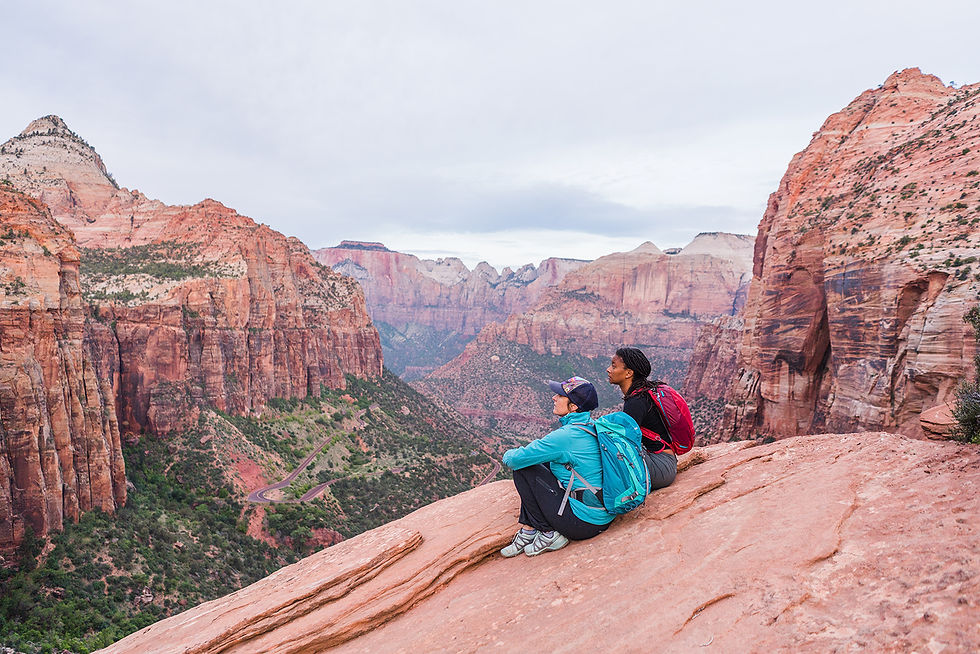
If you're planning a trip to one of America's iconic national parks this year — or you're visiting us at Camp Land Beyond Zion — there are some significant changes for 2026 that are worth knowing about before you go. As someone who loves these parks and wants everyone to be able to enjoy them, I want to be upfront: I don't agree with all of these changes. But I also want to make sure you have the information and options you need.
The Park Pass Now Has Politicians on It. Here's What That Means.
For over two decades — more than a decade of which featured photos selected from an annual public photo contest run by the National Park Foundation called "Share the Experience" — the America the Beautiful annual pass has featured stunning nature photography. Past winners have showcased places like Arches National Park and bison roaming the plains. The contest has drawn thousands of entries each year from amateur photographers, with the grand prize winner receiving $10,000 and the honor of having their image featured on the pass.
For 2026, that tradition was broken. The 2026 pass design features side-by-side portraits of Presidents George Washington and Trump, replacing the traditional nature-themed artwork — and this is a violation of federal law, which requires the main annual pass to feature the winning photo from the National Park Foundation's annual photo contest. That winner was an image of Glacier National Park.
I'll be honest with you: this doesn't sit right with me. Throughout the pass's 21-year history, the imagery has always been wildlife, landscape, or outdoor recreation. The parks have always been a space that belongs to everyone — above politics and beyond partisan identity. Putting any sitting president's face on a public lands access pass feels like a politicization of something that's been beautifully apolitical for generations.

The Workaround: Park Pass Sleeves
When this change was announced, a wave of creative resistance followed. People started covering the pass with stickers — until the Park Service said that would void the pass. Smart. So artists and designers came up with a better solution: a sleeve that slides over your pass, displaying beautiful nature imagery without touching or altering the pass itself.
You can get one at parkpasssleeves.com or at recollection — their are even folks offering custom sleeve designs. Your pass remains fully valid, and you get to carry something you're actually proud to pull out at the gate.
International Visitors Now Pay $100 Extra. Here's What That Looks Like in Practice.
This one affects a lot of guests who visit us at camp, and I want to make sure you're not caught off guard.
Starting January 1, 2026, a $100 per-person fee — charged on top of the typical $35 per vehicle fee — applies to entry for foreigners ages 16 and older at 11 of the country's most-visited national parks. Those parks are Grand Canyon, Yellowstone, Yosemite, Zion, Glacier, Grand Teton, Rocky Mountain, Acadia, Bryce Canyon, Sequoia & Kings Canyon, and Everglades.
For U.S. residents, the annual "America the Beautiful Pass" remains $80 for all fee-charging national parks and other federal recreation sites. For non-U.S. residents, a new annual pass is available at $250, which covers the passholder and passengers in a private vehicle, or the passholder and three additional adults at sites that charge per person.
So to put this plainly: what used to be one accessible, flat fee for everyone is now a two-tiered system based on where you're from. I fundamentally disagree with this. Our parks were built on the idea that nature belongs to everyone. Making them significantly more expensive for international visitors — many of whom budget carefully for a once-in-a-lifetime trip to the American West — feels like a step backward for accessibility and for the welcoming spirit that has always defined these places.

Workarounds for International Visitors
Here are a few practical ways to navigate this:
1. Stay at a campground like ours and explore with US-based friends. Here's something worth knowing: a valid America the Beautiful Annual Pass covers the passholder and all passengers in a private vehicle. That means a US resident with a pass can bring everyone in their car — including international friends — at no additional cost. If you're staying at camp and make friends with some of our US guests headed into the park, ask if you can join them for a day. It's the kind of spontaneous connection that camping makes possible, and it saves you $100 a head. (Also if you let us know ahead of time you are coming we might be able to find a friend to take you in!)
2. Do the math on the annual pass. The Mariposa County Tourism Bureau recommends that most groups of international visitors planning to visit more than one national park purchase the $250 annual non-resident pass, since it covers the passholder and multiple adults in the vehicle. If you're traveling as a group or hitting several parks, the math often works in your favor.
3. Visit parks that aren't on the list of 11. The surcharge applies only to the 11 most-visited parks. Over 400 national park sites exist — consider visiting other spots around us outside of Zion for a very similar experience. We have a number of state parks and national recreation areas that are just as stunning as Zion withink 15-60 minutes from the campground. Here are a few of our favorites that have a small fee or are free to enter:
Water Canyon trailhead (15 mins from the campground) Coral Pink Sand Dunes State Park
Gooseberry Mesa Red Cliff National Conservation Area (Red Reed Trail) Snow Canyon State Park
Ashdown Gorge Trail
Cedar Breaks National Monument
Kanarraville Falls
You can visit all of these places easily right around us and we are happy to share these beautiful places with you.
Locals Pro Tip
Enter either before or after the entrance station staff is present. Having spent years residing in the Zion area and working as a guide, I have befriended many of the park employees, and I can assure you they are not thrilled about these new fees. If you arrive at the park before the gates open (5-6am during the summer and typically 7-8am in the cooler months) you will skip the fees all together. Just note that once you go in the park, you will not be able to re-enter if you leave.
The Bottom Line
These parks are extraordinary, and they're worth visiting despite the politics swirling around them right now. My goal in sharing this is simply to make sure you go in with eyes open — and with a plan. Whether it's sleeving your pass or connecting with fellow campers for a shared day in the park, there are ways to navigate this that keep the experience what it should be: joyful, accessible, and fully focused on the land itself.
See you out there.
Have questions before you arrive? Reach out — we're happy to help you plan.


Comments